The Pokémon Neo series defined the early 2000s TCG era, introducing Johto’s roster with an art style and storytelling depth that still captivate collectors today. Across Neo Genesis, Neo Discovery, Neo Revelation, and Neo Destiny, the sets experimented with new mechanics and darker tones that stood apart from the Base and Jungle years. Print quality varied wildly—centering, silvering, and faint holo lines were constant obstacles—so PSA 10s became legendary in scarcity.

Disclosure: We use referral links to our partner marketplaces, such as eBay and TCGplayer, for some of the collectibles featured on this page. If you make a purchase through one of these links, we may earn a small commission at no extra cost to you. It's a simple way to support our writers.
Many cards from this era now carry deep nostalgic and historical value, bridging the Game Boy generation with the maturing TCG scene. These sets also marked the debut of Shining Pokémon, the Dark subset, and more mature themes in Pokémon art. For collectors chasing perfect condition, Neo cards represent the soul of vintage Pokémon collecting. Let’s explore the twenty PSA 10 Neo cards that best capture that legacy.
20. Slowking #014/111 – Neo Genesis
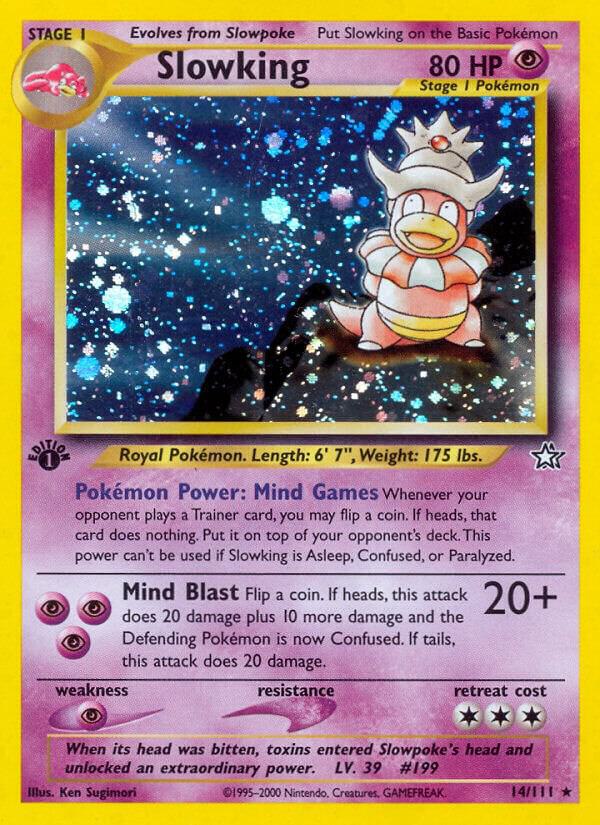

Slowking’s English release came with one of the most famous translation mix-ups in TCG history, a difference that makes it unforgettable for seasoned collectors. The art conveys a calm, regal tone—an early sign that Johto designs leaned into personality more than power. Its lore connection to psychic knowledge and leadership resonated with fans familiar with the anime. Surviving examples in pristine condition are rare due to silvering that plagued Genesis holos.
19. Celebi #03/64 – Neo Revelation
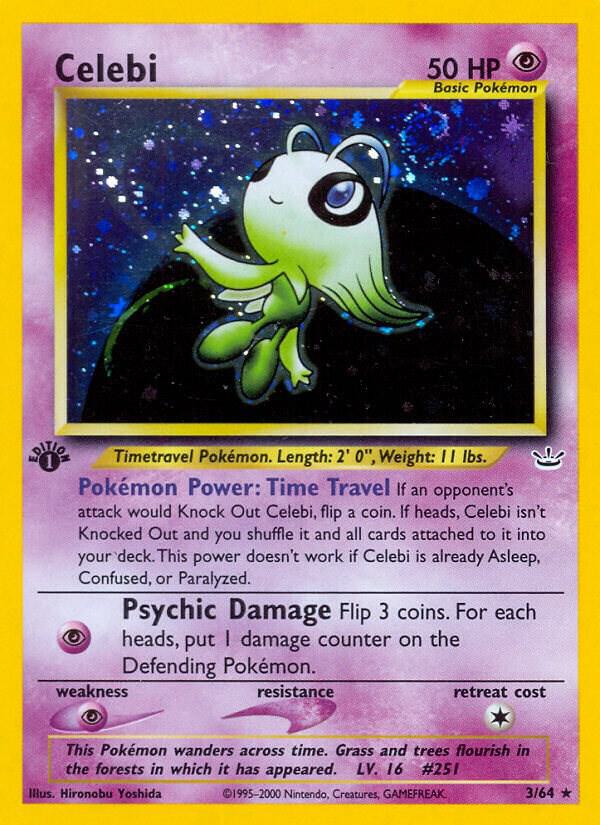
Neo Revelation introduced Celebi as a mythical bridge between regions and timelines, setting up one of Pokémon’s most enduring legends. The card’s gentle holo backdrop and minimalist composition reflected the spiritual side of the Johto saga. Collectors see it as the first major appearance of Celebi before its role expanded in later media. Early print runs often suffered from faint scratches, making PSA 10s surprisingly uncommon.
18. Houndour #05/75 – Neo Discovery
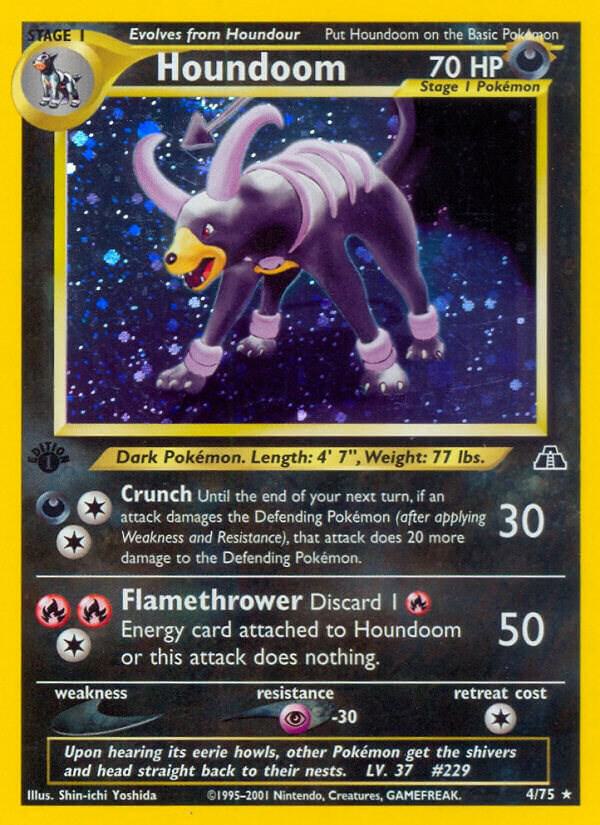
By Neo Discovery, the TCG was experimenting with mood-driven art—and Houndour’s card captured that transition perfectly. The composition, lit by the glow of its own fire, felt more cinematic than anything seen in the Base era. It’s widely remembered as the prelude to Houndoom’s darker identity in later sets. Discovery packs were notorious for uneven print surfaces, so flawless copies command steady admiration.
17. Entei #06/64 – Neo Revelation
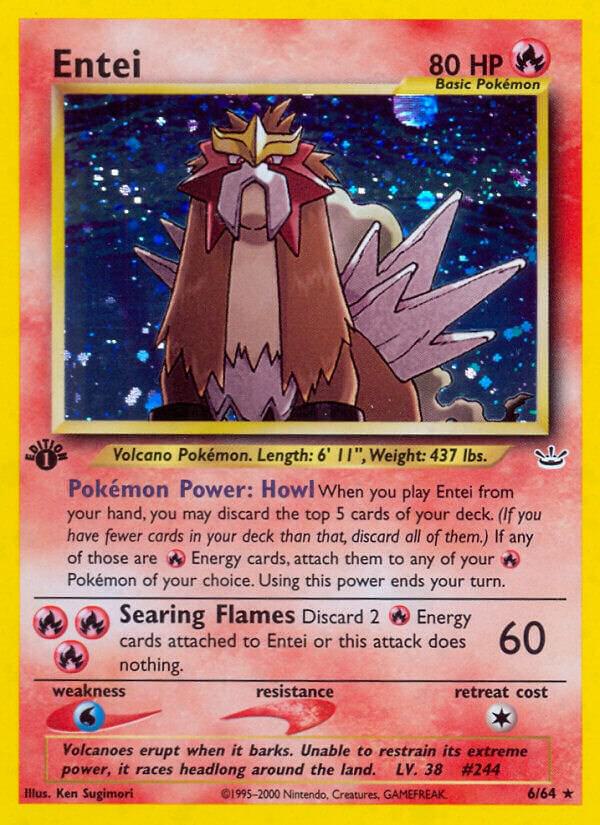
Entei’s Revelation card stands as a tribute to the Johto mythos surrounding the Burned Tower. The swirling red foil and powerful pose evoke the intensity of the beast trio’s origin story. Released alongside Pokémon 3: The Movie, it became a visual icon of that era’s crossover between game and cinema. Many raw cards show edge flaking, keeping PSA 10s in short supply.
16. Raikou #13/64 – Neo Revelation
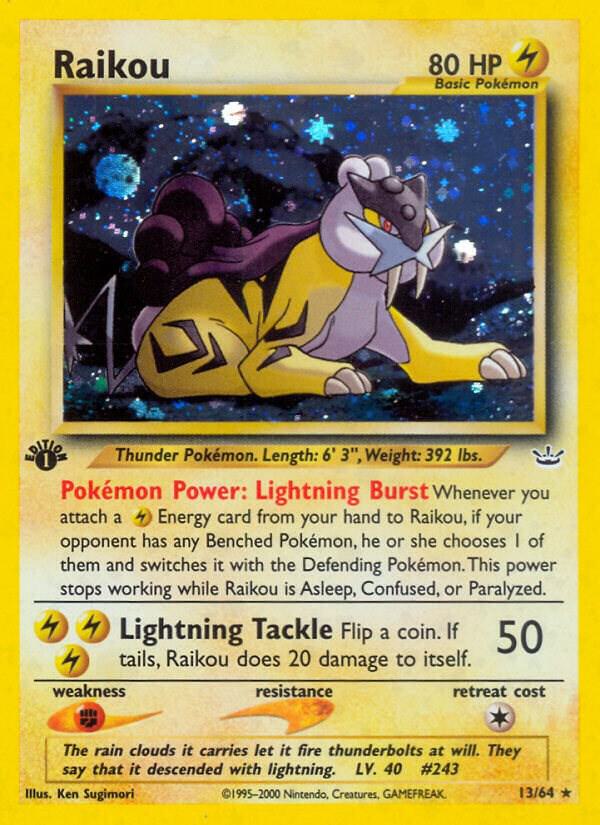
Raikou’s holo treatment mirrors the chaotic energy of lightning—one of the earliest cards to emphasize motion through foil texture. The artwork’s directional streaks and vivid palette made it feel alive, unlike anything from previous sets. Its connection to the Legendary trio gives it enduring collectible weight. Perfect-condition cards remain rare, with alignment flaws often preventing higher grades.
15. Typhlosion #017/111 – Neo Genesis
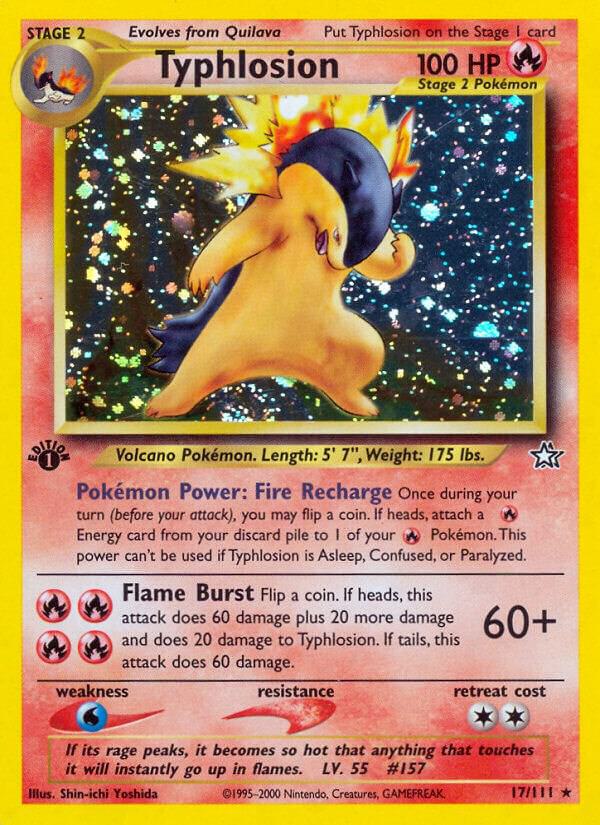
This card’s reputation among collectors is legendary. Known for chronic print-line defects across nearly every sheet, PSA 10 Typhlosions are almost mythical. Beyond rarity, it represents the start of a new generation’s competitive identity, with Johto starters symbolizing the transition from nostalgia to evolution. For many, it’s the Neo equivalent of a first-edition Charizard in difficulty and prestige.
14. Houndoom #08/64 – Neo Revelation
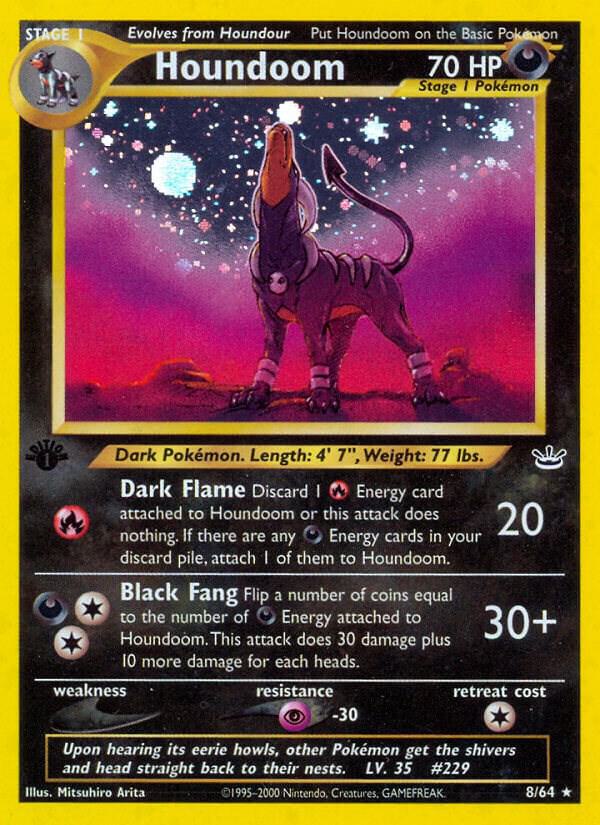
Houndoom marked a visual and thematic milestone for the TCG: darker palettes, mature tone, and cinematic lighting became the new standard. The art tells a story rather than simply presenting a Pokémon. Collectors often cite this card as the start of Neo’s atmospheric identity. With few clean surfaces and frequent silvering, PSA 10s have become cult-level trophies.
13. Shining Magikarp #66/64 – Neo Revelation
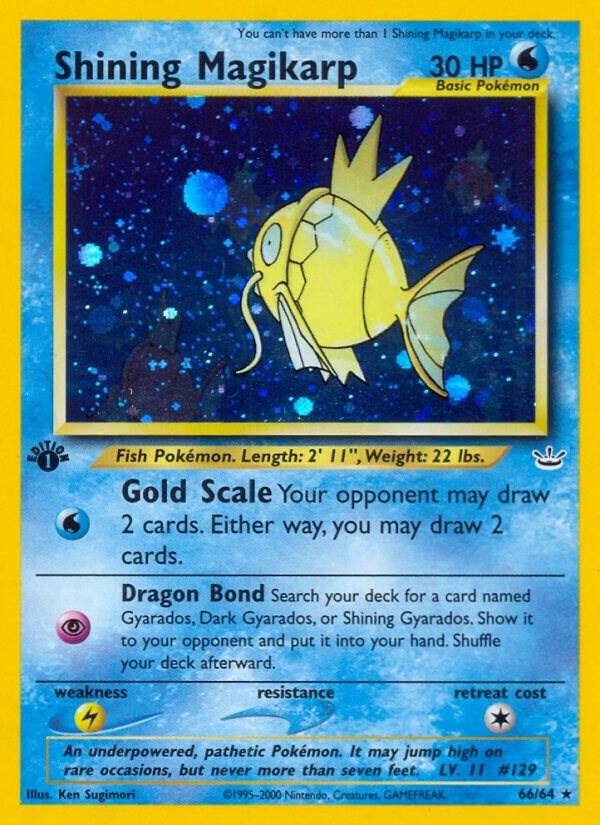
Shining Magikarp was a moment of pure surprise for players opening packs in 2001—it broke the rules of rarity and turned a joke Pokémon into a status symbol. As one of the first “Shining” cards, its golden glow symbolized a design revolution. It’s also the foundation of today’s alternate-color chase culture. The novelty and scarcity of perfect copies give it deep historical value.
12. Shining Kabutops #108/105 – Neo Destiny
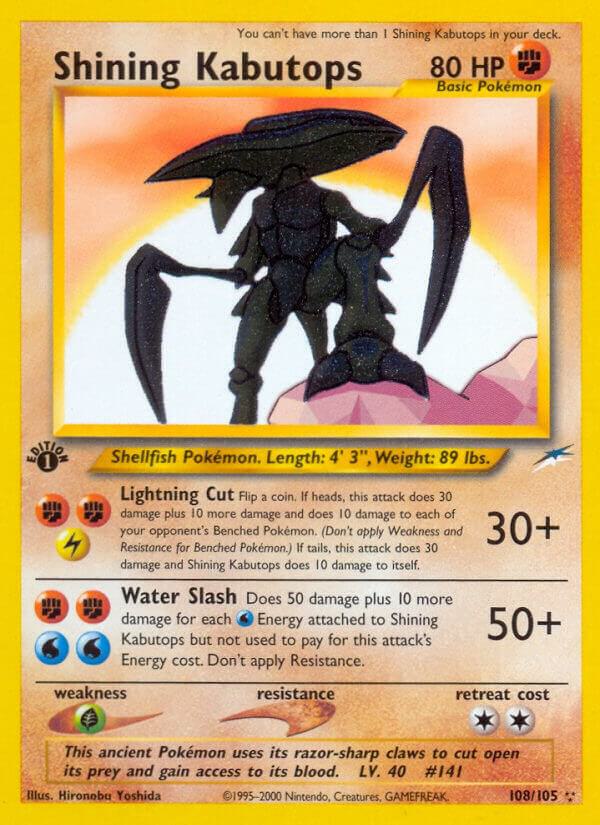
When Neo Destiny launched, it closed the Neo saga with a focus on moral contrast—light and dark, normal and shining. Kabutops embodied that theme, with metallic tones and anatomical detail rarely seen in Pokémon art. It bridged fossil-era nostalgia with a futuristic finish that collectors loved. High-grade versions remain elusive, reflecting the fragility of the holo layer used in the Destiny print run.
11. Dark Espeon #004/105 – Neo Destiny
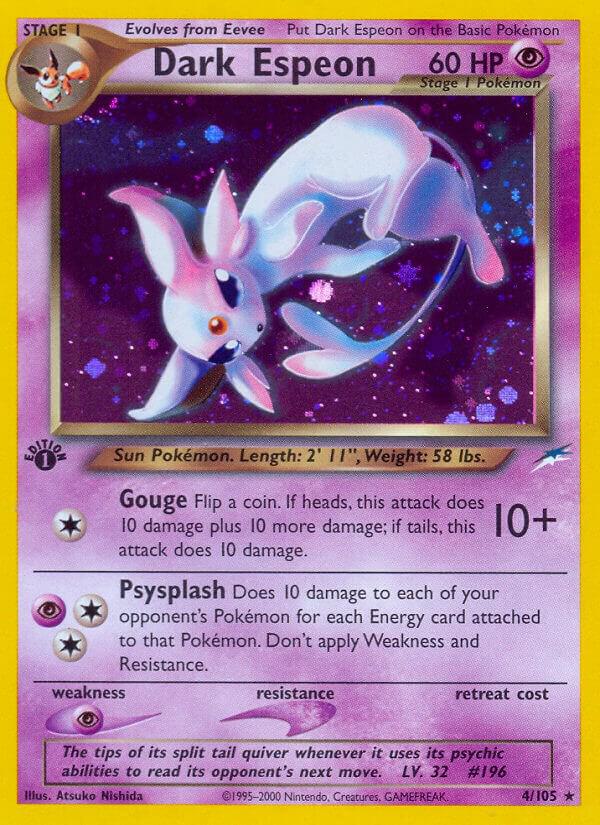
Dark Espeon combined elegance with corruption, a concept unique to this set’s narrative of Team Rocket influence. Its dreamy, violet composition and cold expression felt more like a character study than a trading card. It was one of the few cards to merge Johto popularity with the darker tone of the Rocket legacy. Mint examples are limited due to Destiny’s known surface-print defects.
10. Shining Celebi #106/105 – Neo Destiny
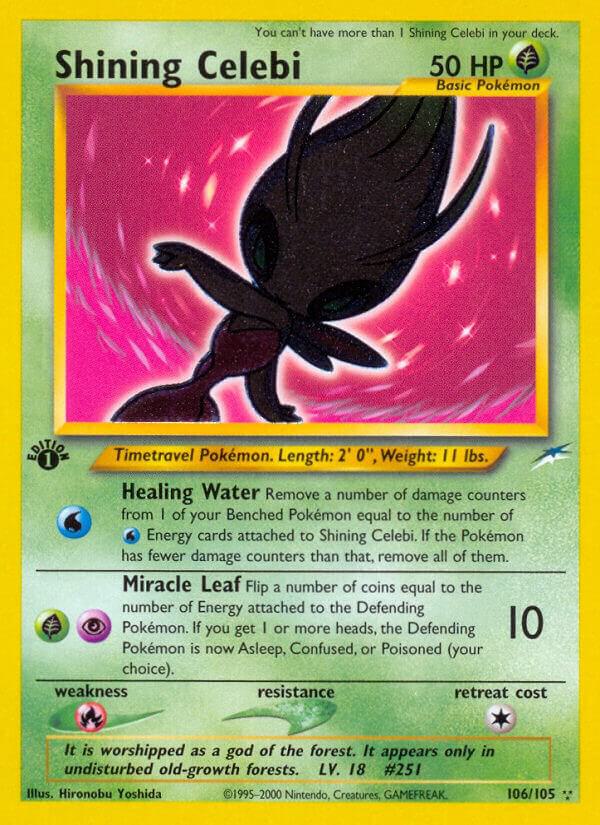
Shining Celebi symbolized the light half of Neo Destiny’s moral theme, often viewed as the “antidote” to the Dark series. Its ethereal greens and near-translucent glow gave the set a sense of resolution. For collectors, it represents hope and completion within the Neo storyline. PSA 10 examples maintain prestige as one of the era’s most visually balanced Shining cards.
9. Shining Mewtwo #109/105 – Neo Destiny
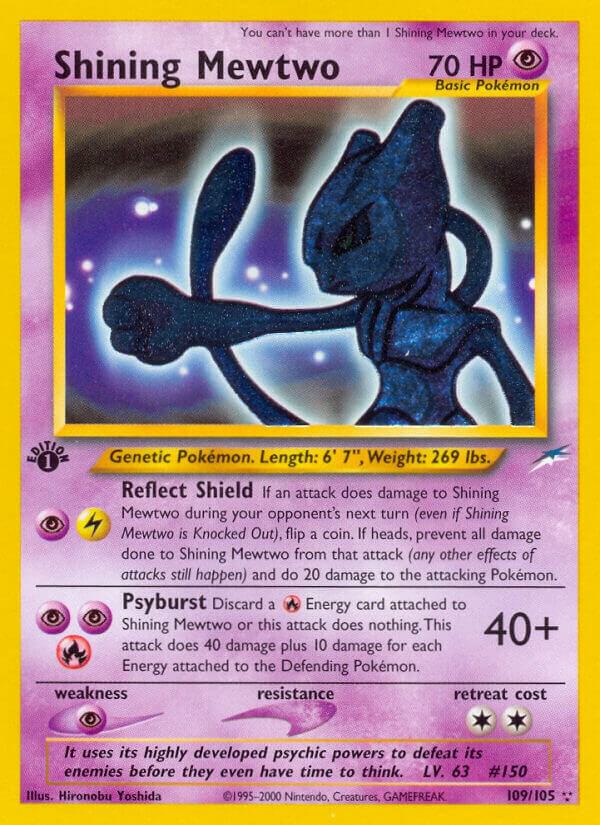
Shining Mewtwo brought the legendary psychic to life in a completely new way—dark background, inverted coloration, and energy orbs swirling like a miniature galaxy. It was both a visual experiment and a farewell to the classic TCG era. Collectors often view it as the high point of Neo Destiny’s design ambition. Very few copies escaped holo scratching, making gem mint examples standout prizes.
8. Shining Noctowl #110/105 – Neo Destiny
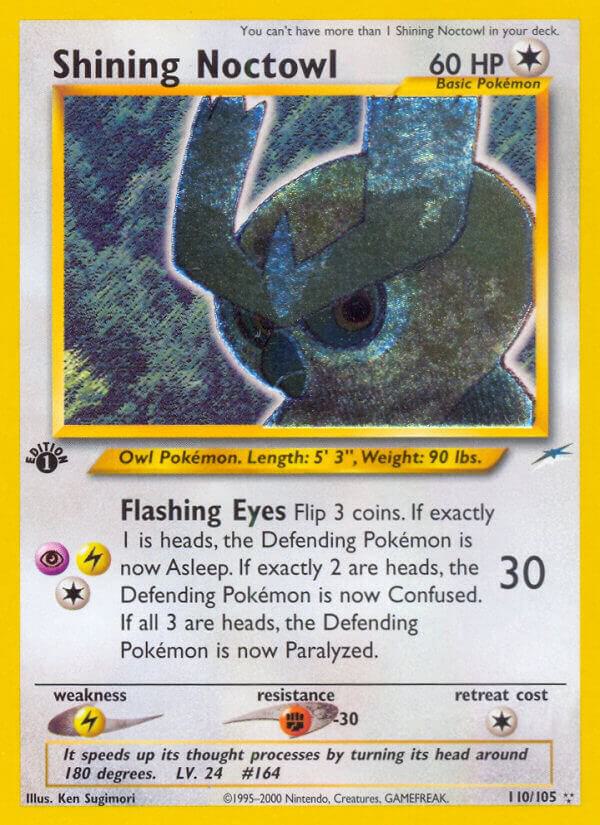
Among the earliest Shining Pokémon, Noctowl broke expectations with its striking silver coloration. It served as proof that The Pokémon Company could reinterpret canon designs without breaking fan trust. Its eerie atmosphere and quiet composition make it a sleeper favorite among art-focused collectors. Perfectly centered PSA 10s remain rare due to Destiny’s foil inconsistencies.
7. Shining Tyranitar #113/105 – Neo Destiny
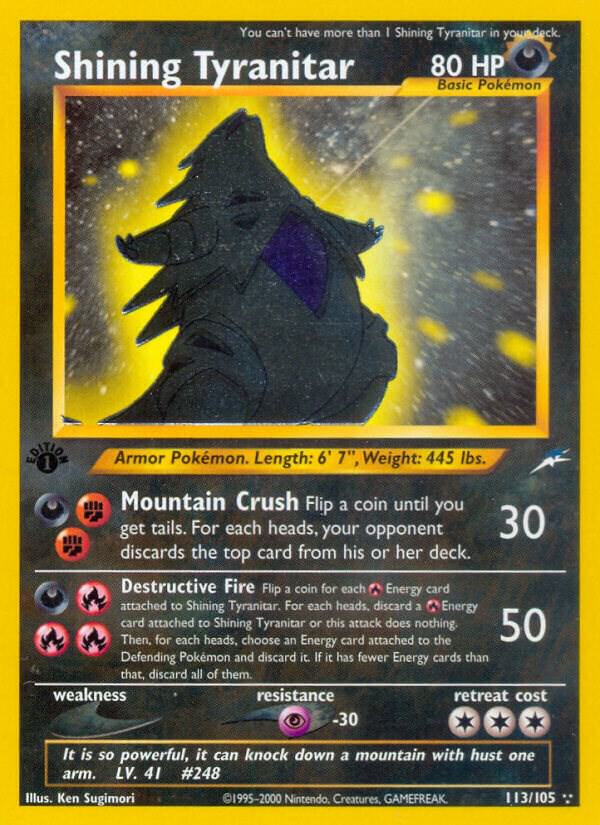
If Shining Charizard was the headline, Shining Tyranitar was the exclamation point of Neo Destiny. The artwork radiates dominance and intensity, capturing the final evolution of Neo’s darker tone. Many consider it one of the last “true chase” cards of the vintage era before mass printing. The low pull rate and deep-black foil make pristine examples incredibly hard to secure.
6. Dark Gengar #006/105 – Neo Destiny
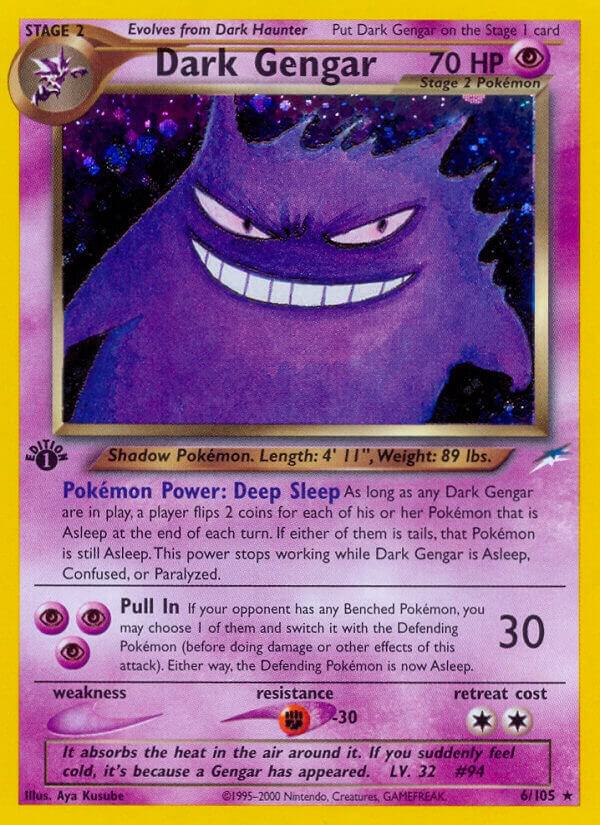
Dark Gengar stood out for its psychological storytelling—its grin and color scheme hinted at control and manipulation. The card tied directly into the game’s strategy themes, where Gengar’s abilities mirrored its haunting personality. For collectors, it’s a benchmark of how character-driven the Neo series became. High-grade copies are admired for their flawless depth of color.
5. Dark Scizor #009/105 – Neo Destiny
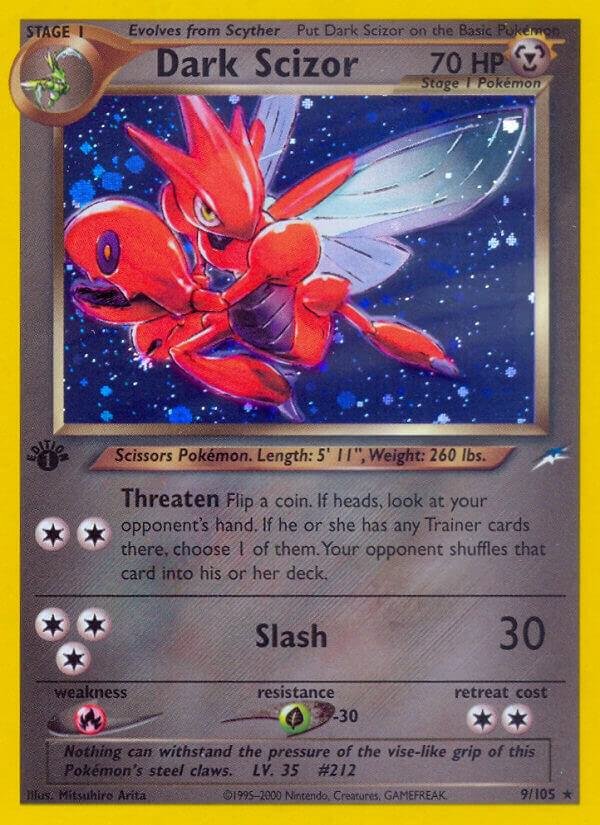
This card captured the tension between technology and darkness, reflecting Neo Destiny’s futuristic tone. Scizor’s sleek posture and high-contrast composition created an almost industrial aesthetic. It’s one of the few cards from the era that feels ahead of its time visually. PSA 10 examples highlight just how refined the Neo Destiny palette truly was.
4. Shining Gyarados – Neo Revelation
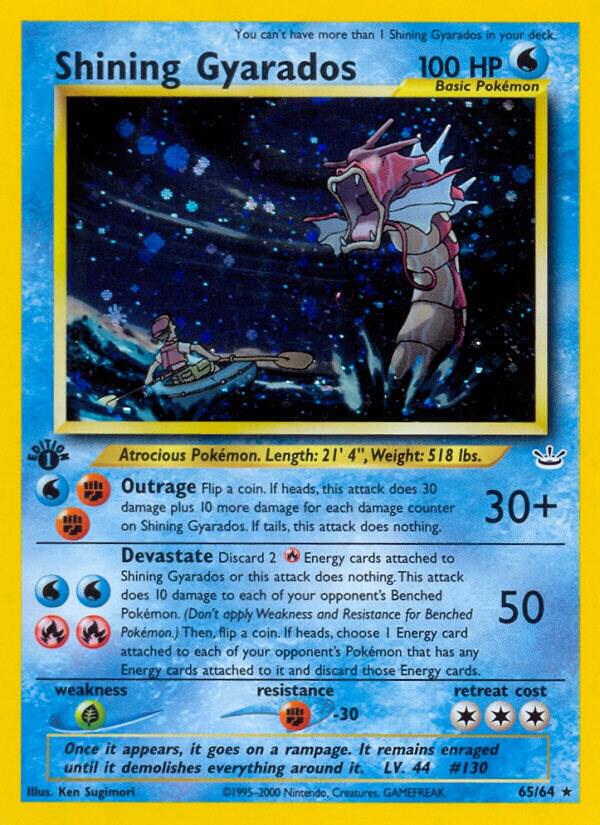
Perhaps the most cinematic moment in TCG history, Shining Gyarados tells an entire story within its frame—Red Gyarados bursting from a storm while a fisherman flees below. It symbolized Pokémon’s evolution into narrative art, not just collectible cards. The contrast between calm water and violent motion remains unmatched. Mint examples are revered as storytelling masterpieces of the early 2000s.
3. Umbreon #13/75 – Neo Discovery
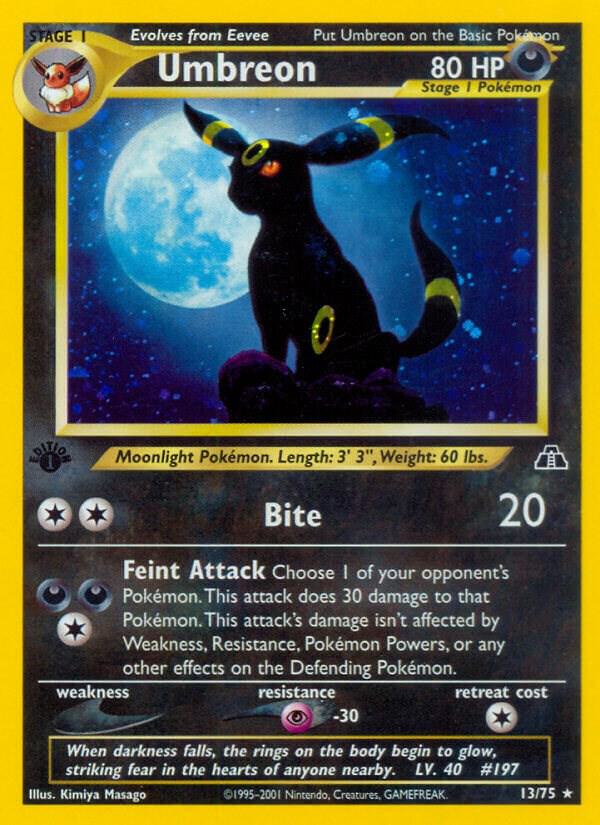
Umbreon’s Neo Discovery version became an emblem of subtlety and restraint. Its quiet stance against a moonlit backdrop introduced a minimalist visual language later seen in e-Reader sets. The mood-driven design appealed to older collectors who valued sophistication over spectacle. Flawless copies rarely appear and are considered essential in any Eeveelution master set.
2. Lugia #009/111 – Neo Genesis
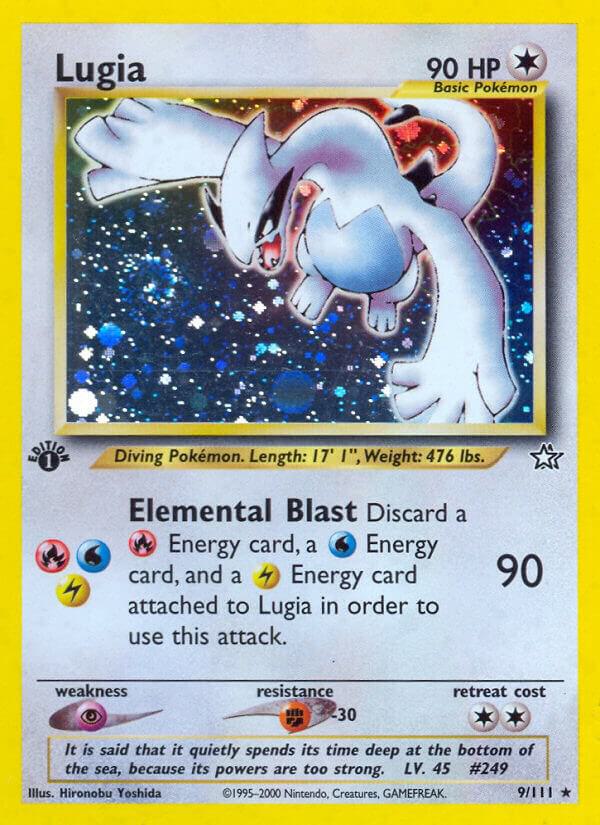
Lugia defined Neo Genesis the same way Charizard defined Base Set—majestic, instantly iconic, and central to the franchise’s identity. The silver holo pattern and swirling energy made it feel alive, a design that matched its status as a legendary guardian. Its grading difficulty—thanks to heavy print lines—turned PSA 10s into status pieces. Many consider it the cornerstone of early Neo collecting.
1. Shining Charizard #107/105 – Neo Destiny
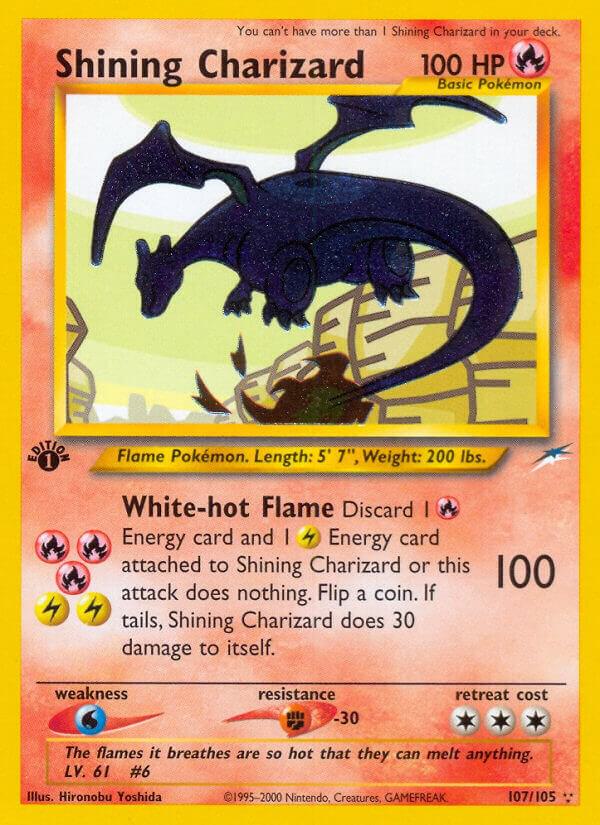
Shining Charizard was Pokémon’s boldest creative gamble: a black-colored Charizard that defied expectations and redefined rarity. It introduced the idea of chase cards as cultural symbols rather than simple collectibles. Even decades later, it remains one of the most instantly recognizable cards in TCG history. PSA 10s are regarded less as trading cards and more as preserved art from a defining moment in the hobby.
The Neo era marked a turning point in Pokémon TCG history—where the game matured, the art deepened, and rarity became part of storytelling itself. Each PSA 10 Neo card reflects that mix of innovation and imperfection that makes collecting so rewarding. For those who appreciate history sealed in cardboard, Neo remains the crown jewel of vintage Pokémon.

Disclaimer: eBay links on this page use a referral system that helps support the content—at no extra cost to you.